

qqeaik.over-blog.com/
18 Février 2021

When you buy a subscription to Microsoft 365 for business, you sign upfor a set of apps and services that you pay for on either a monthly oran annual basis. Xbox is a pc. The applications and services that you receive as partof your subscription depend on which product you purchased, such asMicrosoft 365 Apps for business or Microsoft 365 Business Standard. Youcan see what comes with each product on the Microsoft 365 for small and medium-sized businesses page.
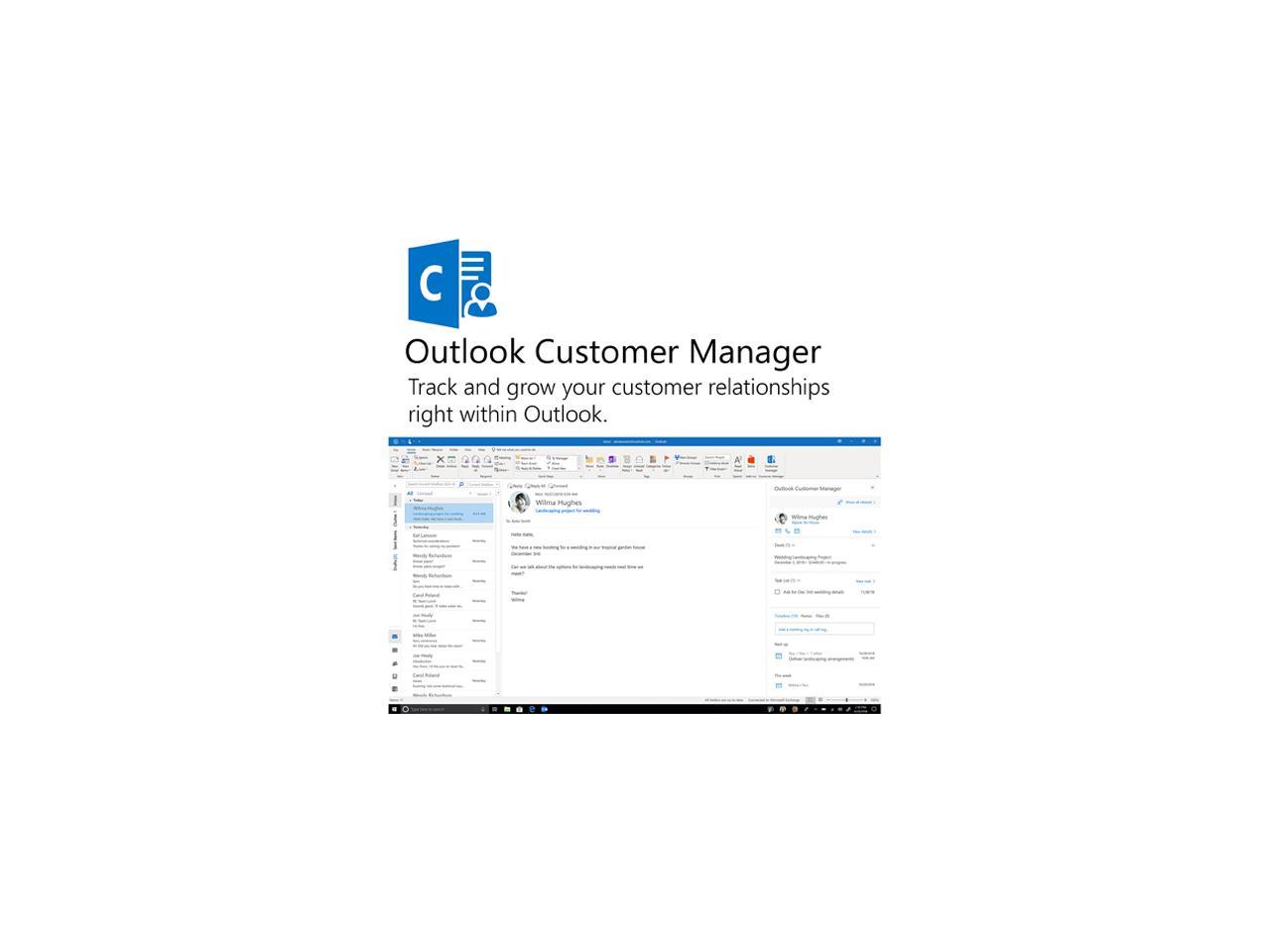
As a CSP partner, one of the central things you do is offer subscriptions for Microsoft products to your customers. In Partner Center, you can manage all your subscriptions for each customer. You can add subscriptions, add licenses to existing subscriptions, even offer trial subscriptions to customers who want to test drive the software.
When you buy a subscription, you specify the number of licenses that youneed, based on how many people you have in your organization. After youbuy a subscription, you create accounts for people in your organization,and then assign a license to each person. As your organizational needschange, you can buy more licenses to accommodate new people, or reassignlicenses to other users when someone leaves your organization.
If you have more than one subscription, you can assign licenses todifferent people for each subscription. For example, you can assign all of your users to all Microsoft 365 applications and services as partof a Microsoft 365 Business Standard subscription. You can also assign a subset of users to Visio Online through a separate Visio subscription.
If your subscription includes any of the following products, each person can install Office on up to five PCs or Mac, five tablets, and five phones.
The following table lists what automatically happens when you assign a license to someone:
| If the subscription has this service | This automatically happens |
|---|---|
| Exchange Online | A mailbox is created for that person. To learn about the SLA for this task to be completed, see 'Setting up..' messages in the Microsoft 365 admin center. |
| SharePoint Online | Edit permissions to the default SharePoint Online team site are assigned to that person. |
| Skype for Business Online | The person has access to the features associated with the license. |
| Microsoft 365 Apps for enterprise | The person can download Office apps on up to five Macs or PCs, five tablets, and five smartphones. |
You don't need to assign licenses to resource mailboxes, room mailboxes, and shared mailboxes, except when they are over their storage quota of 50 gigabytes (GB). For more about non-user mailboxes, see the following articles:
Different types of admins can work with licenses in different ways, depending on their roles. The following table lists the most common options. For a complete list of admin roles and privileges, see About admin roles.
| Admin role | Assign a license | Unassign a license | Buy more licenses | Delete an account |
|---|---|---|---|---|
| Billing admin | No | No | Yes | No |
| Global admin | Yes | Yes | Yes | Yes |
| License admin | Yes | Yes | No | No |
| Service Support admin | No | No | No | No |
| User admin | Yes | Yes | No | Yes |
Buy or remove licenses for your business subscription (article)
Assign licenses to users (article)
Unassign licenses from users (article)
Remove a license from a shared mailbox (article)
This is a question that comes up all the time—Is Microsoft Office 365 considered a cloud solution or Software As A Service?
I guess it all comes down to interpretation. Cloud technologies are all the rage these days. Businesses now have many options when it comes to their computing environment. They can elect to go 100% and put all of their technical resources in a cloud environment, either shared or dedicated. Or, they can store protected data on a private cloud while retaining the ability to use resources from the public cloud. We call this a 'hybrid cloud' in our techy circles. Or, they can elect use shared resources like Microsoft Office 365.

So, is Microsoft Office 365 a cloud solution or a Software as a Service solution? Maybe it's a bit of both.
Many companies are making the move to Office 365. More are now benefitting from its benefits. Microsoft Office 365 provides any-sized organization the ability to use email, work on projects, share information with coworkers in the office, or with partners outside the organization. It's now mainstream and used by businesses of all types.
However, sometimes there's a bit confusion about where Office 365 fits in. Is it the same thing as the Cloud, or is it something else?
To understand where Microsoft Office 365 stands, it's important to know the difference between the Cloud and Software as a Service (SaaS). The Cloud is part of the larger titled Cloud Computing. Cloud Computing is an information technology (IT) paradigm that provides users access to shared pools of system resources and higher-level services that can be rapidly provisioned with minimal management. Cloud Computing involves the sharing of resources, similar to Microsoft Office 365. For this reason, many think Office 365 is the same thing as the Cloud.
Microsoft Office 365 does allow you to access files and information in an easy-to-use, shared pool. It makes emailing and working with others easy, much like the Cloud. However, the Cloud is more than just sharing files and information. Cloud technologies can be confusing. But to keep it simple, when using the Cloud, businesses shift their onsite technologies to the Internet (either private or shared).
The Cloud frees businesses from the maintaining of servers, telephone equipment, and other IT solutions. With the Cloud, computing resources are housed online so they can be accessed from anywhere with an internet connection. With a private cloud, resources can only be used by your authorized users.
In contrast, SaaS is a licensing and delivery model where the software is provided on a subscription basis and is centrally hosted. SaaS is typically accessed by users via a web browser. When looking at Office 365, this seems like a much better fit as far as categorization goes. In other words, SaaS is an application that's not housed on premise.
Microsoft Office 365 is a subscription-based service that's accessed through the Internet on a web browser. It's not stored on your computer—You must launch it through a web browser each time you use it. SaaS applications can be run in the Cloud, but this doesn't make them a Cloud.
The confusion surrounding Microsoft Office 365 stems from the fact that it's accessed via a web-based system -similar to the way cloud computing allows you to share and work on various projects regardless of your physical location. It's important to remember that it's not stored on your computer. You can access Office 365 from wherever you are, on any computing device, as long as you have a subscription and an internet connection. It's the same with any SaaS solution.
There's a huge difference between cloud computing and SaaS. The Cloud's focus revolves around virtual computers/servers, data storage capacity, communications, messaging, networks, and development environments. This isn't the case with SaaS. SaaS is an application. SaaS is better suited for our purposes, than is the Cloud is.
When comparing the two systems, look at services they offer and how they can benefit your business. This will help you understand how Office 365 can work for your business purposes. The Cloud is better suited to large enterprises, that are involved in software development or other complicated computing processes. SaaS is for those who depend on software applications, which include all of us. Office 365 is simple to use, as exemplified by its widespread use ranging from company executives to college students. For these reasons, it would be considered a Software as a Service.
Does this mean that you can only use one or the other?—That you must decide between the Cloud or various SaaS applications such as Microsoft Office 365? No, it does not. The great thing about Microsoft Office 365 is that, because it's more like an application, it can be run on both cloud servers and physical servers.
Microsoft Office 365 is a versatile tool that offers a multitude of functions that will make your work life much easier. To understand Microsoft Office 365 just remember, it's a web- based system that allows you to access pools of files and information, not a server focused on data storage and capacity.
This is a question that comes up all the time—Is Microsoft Office 365 considered a cloud solution or Software As A Service?
I guess it all comes down to interpretation. Cloud technologies are all the rage these days. Businesses now have many options when it comes to their computing environment. They can elect to go 100% and put all of their technical resources in a cloud environment, either shared or dedicated. Or, they can store protected data on a private cloud while retaining the ability to use resources from the public cloud. We call this a 'hybrid cloud' in our techy circles. Or, they can elect use shared resources like Microsoft Office 365.
So, is Microsoft Office 365 a cloud solution or a Software as a Service solution? Maybe it's a bit of both.
Many companies are making the move to Office 365. More are now benefitting from its benefits. Microsoft Office 365 provides any-sized organization the ability to use email, work on projects, share information with coworkers in the office, or with partners outside the organization. It's now mainstream and used by businesses of all types.
However, sometimes there's a bit confusion about where Office 365 fits in. Is it the same thing as the Cloud, or is it something else?
To understand where Microsoft Office 365 stands, it's important to know the difference between the Cloud and Software as a Service (SaaS). The Cloud is part of the larger titled Cloud Computing. Cloud Computing is an information technology (IT) paradigm that provides users access to shared pools of system resources and higher-level services that can be rapidly provisioned with minimal management. Cloud Computing involves the sharing of resources, similar to Microsoft Office 365. For this reason, many think Office 365 is the same thing as the Cloud.
Microsoft Office 365 does allow you to access files and information in an easy-to-use, shared pool. It makes emailing and working with others easy, much like the Cloud. However, the Cloud is more than just sharing files and information. Cloud technologies can be confusing. But to keep it simple, when using the Cloud, businesses shift their onsite technologies to the Internet (either private or shared).
The Cloud frees businesses from the maintaining of servers, telephone equipment, and other IT solutions. With the Cloud, computing resources are housed online so they can be accessed from anywhere with an internet connection. With a private cloud, resources can only be used by your authorized users.
In contrast, SaaS is a licensing and delivery model where the software is provided on a subscription basis and is centrally hosted. SaaS is typically accessed by users via a web browser. When looking at Office 365, this seems like a much better fit as far as categorization goes. In other words, SaaS is an application that's not housed on premise.
Microsoft Office 365 is a subscription-based service that's accessed through the Internet on a web browser. It's not stored on your computer—You must launch it through a web browser each time you use it. SaaS applications can be run in the Cloud, but this doesn't make them a Cloud.
The confusion surrounding Microsoft Office 365 stems from the fact that it's accessed via a web-based system -similar to the way cloud computing allows you to share and work on various projects regardless of your physical location. It's important to remember that it's not stored on your computer. You can access Office 365 from wherever you are, on any computing device, as long as you have a subscription and an internet connection. It's the same with any SaaS solution.
There's a huge difference between cloud computing and SaaS. The Cloud's focus revolves around virtual computers/servers, data storage capacity, communications, messaging, networks, and development environments. This isn't the case with SaaS. SaaS is an application. SaaS is better suited for our purposes, than is the Cloud is.
When comparing the two systems, look at services they offer and how they can benefit your business. This will help you understand how Office 365 can work for your business purposes. The Cloud is better suited to large enterprises, that are involved in software development or other complicated computing processes. SaaS is for those who depend on software applications, which include all of us. Office 365 is simple to use, as exemplified by its widespread use ranging from company executives to college students. For these reasons, it would be considered a Software as a Service.
Does this mean that you can only use one or the other?—That you must decide between the Cloud or various SaaS applications such as Microsoft Office 365? No, it does not. The great thing about Microsoft Office 365 is that, because it's more like an application, it can be run on both cloud servers and physical servers.
Microsoft Office 365 is a versatile tool that offers a multitude of functions that will make your work life much easier. To understand Microsoft Office 365 just remember, it's a web- based system that allows you to access pools of files and information, not a server focused on data storage and capacity.


/image%2F6311967%2F20210221%2Fob_bbc9c1_apk-on-windows-pc.jpeg)
/image%2F6311967%2F20210221%2Fob_e6b42f_what-is-adobe-acrobat.jpeg)
/image%2F6311967%2F20210221%2Fob_dfad0f_premiere-elements-2020-vs-imovie.png)
/image%2F6311967%2F20210221%2Fob_5c5b74_android-file-transfer-windows-7-wifi.png)